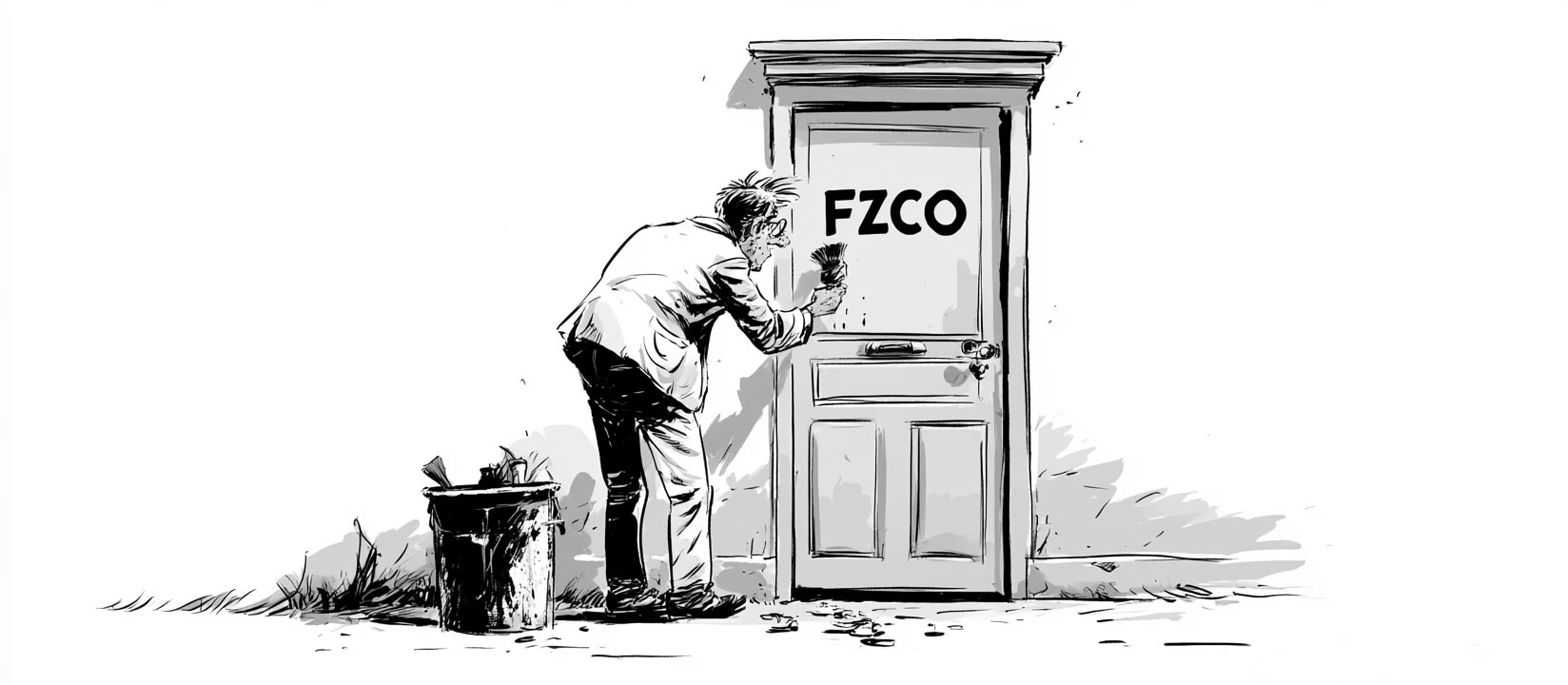
Anyone who has run a legal entity in a free zone knows the genre. A circular arrives, politely worded, explaining that the suffix you have been using for years is now the wrong suffix. There is a transition window and a form. Nobody is in trouble. The building is the same, the bank account is the same, the people answering the phone are the same. Only the three letters after the name have to change, plus a pile of paperwork to update every portal at the tax authority and the banks, reprint the letterheads, and notify every counterparty.
So they have changed. In line with a requirement from our local regulator, our legal entity is now Rare Digits Production FZCO. Same office in Preatoni Tower, same team, same invoices arriving on the same schedule. If you have a contract with us, it keeps running; we will reissue paperwork under the new name as renewals come up, and you do not need to do anything.
The Part Nobody Bills For
Here is the thing we have watched go sideways at client after client: a legal rename looks like a one-line change and behaves like a small earthquake. The entity is referenced by its old legal name in the accounting system, in the consolidation mapping, in three integrations nobody has opened since go-live, and in one spreadsheet that turns out to be load-bearing. Change the name in one place, and the group report stops reconciling for reasons that take a junior accountant a full day to find.
We rename ourselves the way we tell clients to: the legal name is one field, mapped once, and every system that needs it reads from that field rather than keeping its own copy.
A company’s name should live in exactly one place. Everything else points at it.
That is also, not by coincidence, what a consolidated view is for. When each entity in a holding keeps its own copy of the truth, a regulator’s circular becomes a week of work. When there is one source, it becomes a Wednesday.
One friendly reminder if you are a DMCC entity yourself: the deadline to change your suffix is 30 June. Don’t fumble it.
So: new suffix, same us. Update your records at your leisure, and if your own group is dreading its next rename, that is a solvable problem. Corsair HQ was built for exactly the part nobody bills for.